


Think all bond funds are safe? Think again.
Duration and credit quality are the two levers that decide how much a bond fund will swing in value and how likely you are to get paid back.
Duration measures interest-rate sensitivity in years.
Credit quality rates borrowers’ strength.
This post shows how to use those two facts to pick a bond fund that matches when you need the money, how much income you want, and how much loss you can live with.
Read on to learn a simple step-by-step checklist.
Core Principles of Duration and Credit Quality in Bond Fund Selection

Duration tells you how much a bond fund’s price moves when interest rates shift. It’s shown in years, and that number gives you a rough estimate of how much value you’ll lose if rates go up one percentage point. So if you’ve got a fund with five years of duration, expect about a 5% drop when rates climb 1%. Same swing in reverse if rates fall. Credit quality is different but just as important. It shows how financially solid the borrowers are, whether they’ll actually pay you back or end up defaulting. These two factors control almost everything in bond investing: volatility, income, and whether you get your money back when you need it.
Picking a bond fund really comes down to deciding how much interest-rate risk and default risk you’re okay with. Short-duration funds filled with high-quality credits barely move, but they don’t pay much. Long-duration funds or ones packed with lower-rated bonds can pay more, but they can also drop fast when the market turns. You’ve got to match the fund’s risk to your own situation. How long can you leave the money alone? How much does volatility bother you? How much income do you actually need?
Most people start with two questions: “When do I need this money?” and “How much can I afford to lose?” If you need the cash in two years, a fund with 10-year duration makes no sense. A rate spike could erase years of interest in a month. If you’re retired and counting on income, a fund stuffed with junk bonds might pay 7% now but hand you a 15% loss next year if defaults climb. Duration and credit quality let you spot those risks before you commit.
Key takeaways:
- Duration measures interest-rate sensitivity. Each year means roughly 1% price change for every 1% rate move.
- Credit quality reflects issuer strength and default odds. Higher quality means lower yield but more safety.
- Longer duration increases both potential gain and potential loss when rates shift.
- Lower credit quality boosts yield but raises the chance of defaults, downgrades, and sharp drops during stress.
Understanding Duration Types and Their Impact on Risk
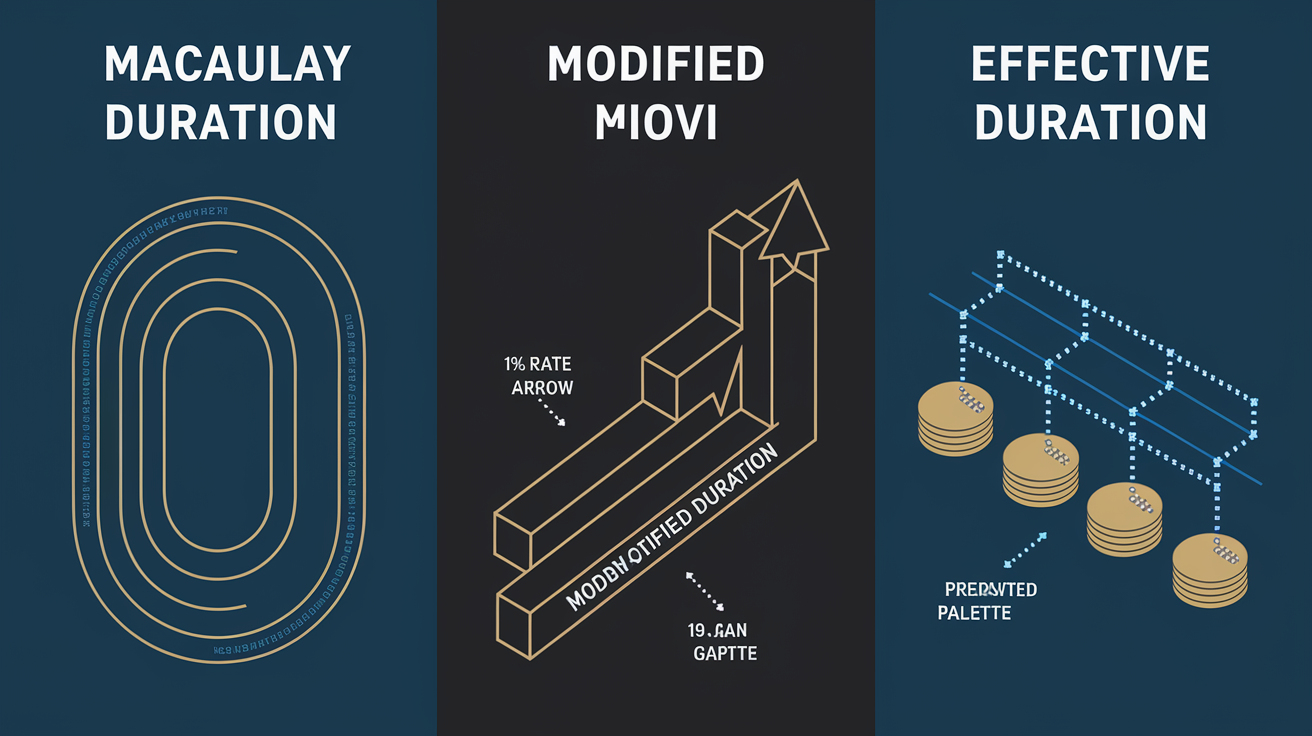
You’ll see three duration measures when you dig into bond funds: Macaulay, modified, and effective. Macaulay duration is the weighted average time until you get all the bond’s cash back. It’s mostly a technical input for the other two. Modified duration is what most funds report. It estimates the percentage price change for a 1% rate move, assuming the bond doesn’t have options like early calls or prepayment. Effective duration does the same thing but accounts for bonds that can be called early or paid off before maturity, like mortgage-backed securities or callable corporates. If a fund holds any bonds with those features, effective duration is the number that actually matters.
The difference shows up when rates move. A fund with modified duration of 7 might look stable, but if half the holdings are callable and rates drop, issuers will refinance early. That shortens the actual duration and caps your gain. Effective duration captures that. On the flip side, if rates rise and prepayments slow down, effective duration can stretch longer than modified, which means bigger losses. Most plain corporate and Treasury funds use modified duration. Mortgage, municipal, and some corporate funds need effective duration to give you an honest risk picture.
| Duration Type | What It Measures | Typical Use Case |
|---|---|---|
| Modified Duration | Price sensitivity to rate changes for bonds without embedded options | Corporate bonds, Treasuries, non-callable securities |
| Effective Duration | Price sensitivity adjusted for prepayment and call features | Mortgage-backed securities, callable corporates, municipals |
| Macaulay Duration | Weighted average time to receive all cash flows | Theoretical input; rarely used directly for portfolio decisions |
Credit Rating Scales and What They Mean for Investors
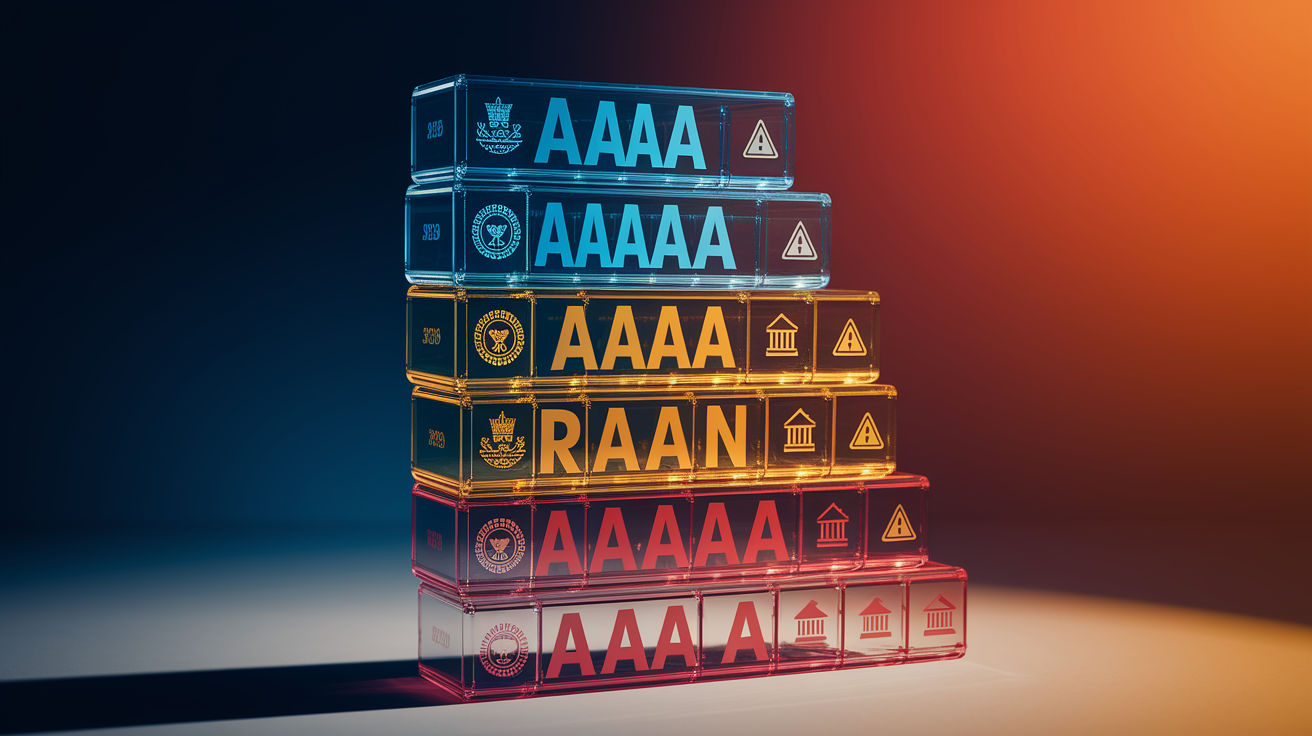
Credit rating agencies assign letter grades based on the issuer’s ability to pay back principal and interest on time. AAA (or Aaa from Moody’s) sits at the top, reserved for the safest borrowers: governments, a few huge corporations, entities with rock-solid balance sheets. As you move down through AA, A, and BBB, default risk creeps up, but it’s still considered investment-grade. BBB- is the last rung. One notch below that is BB+, and you’ve crossed into speculative-grade or high-yield territory. People call them “junk bonds.” At the bottom, CCC, CC, C, and D, you’re looking at issuers in serious distress or already in default.
Investment-grade bonds (BBB- and above) historically default at very low rates. Over the 30 years from 1990 to 2021, AAA and AA issuers almost never defaulted. Even A and BBB credits stayed stable most of the time. Default rates climb sharply once you drop below BBB. High-yield bonds can offer yields 3 to 5 percentage points higher than investment-grade, but that extra income compensates you for real default risk and the chance that a recession turns your 7% yield into a 20% loss.
Rating downgrades often matter more than actual defaults for most bond fund investors. When a bond gets downgraded from A to BBB, its price drops immediately because buyers demand a higher yield. Some funds are required to sell downgraded bonds, which pushes the price down even further. This migration risk drives a lot of day-to-day volatility in bond funds, especially those holding credits near the investment-grade boundary.
Key rating categories:
- AAA/AA: Highest quality, minimal default risk, lowest yields.
- A: High quality, very low default probability, slightly higher yield than AAA/AA.
- BBB: Lowest investment-grade tier, moderate credit risk, noticeable yield pickup.
- BB and below: Speculative-grade (high-yield), elevated default risk, materially higher yields.
- CCC to D: Distressed or defaulted, high loss probability, avoid unless you’re a specialist.
Balancing Yield, Risk, and Interest Rate Exposure

Chasing yield without looking at duration and credit quality is how investors get hurt. A fund advertising 6% yield might get there by loading up on 10-year duration bonds rated BBB-. You’re exposed to both a potential 10% loss if rates rise 1% and a sharp drawdown if the economy weakens and those BBB credits get downgraded. The extra 2 or 3 percentage points of yield over a safer fund can vanish in a single bad quarter. When you see a high yield, ask what kind of risk you’re taking to get it.
Short-duration funds sacrifice yield to keep your principal stable. A fund with 1.5 years of duration and all A-rated holdings might yield only 2.5%, but it won’t lose much value even if rates jump. That trade works if you need the money soon or can’t stomach volatility. Long-duration funds and high-yield funds do the opposite. They amplify your gains when rates fall or credit spreads tighten, but they amplify losses just as fast when conditions reverse. The key is knowing which risk you’re signing up for and making sure it fits your situation. If your time horizon is short or your nerves are frayed, the extra yield isn’t worth it.
Practical Framework for Choosing Bond Funds

Selecting the right bond fund starts with defining what you’re trying to do. Write down your time horizon, how much income you need, and how much volatility you can handle before you panic and sell. Those three answers will point you toward a duration range and a credit-quality band.
Step-by-step selection process:
-
Define your time horizon. Money needed within three years belongs in short-duration funds (1 to 3 years). A three to seven year horizon fits intermediate duration (3 to 6 years). Anything longer than seven years can consider long-duration strategies if you’re comfortable with the swings.
-
Set your volatility tolerance. If a 5% loss in a quarter would make you sell, stick to short duration and investment-grade credit. If you can ride out a 10 to 15% drawdown for higher long-term returns, you can stretch duration or add high-yield exposure.
-
Determine your income target. Calculate the yield you need after fees and taxes. If you need 4% net and a short-duration investment-grade fund yields 2.5%, you’ll have to move down in credit quality, up in duration, or both. Make that choice deliberately, not by accident.
-
Check the fund’s duration and credit mix. Look at the reported modified or effective duration and the percentage of holdings rated BBB or below. A fund with 6-year duration and 40% BBB exposure is taking both rate risk and credit risk.
-
Review fees, liquidity, and manager track record. Bond fund expense ratios should be under 0.50% for broad investment-grade strategies. High-yield and active funds may run 0.40 to 1.00%. Make sure the fund has enough assets (ideally $100 million or more) to trade efficiently.
-
Stress-test the downside. Multiply the fund’s duration by a plausible rate shock, say 1.5%, and see how much you could lose. Then look at historical drawdowns during past rate hikes or credit crunches to confirm you can live with that outcome.
Once you’ve worked through those steps, you’ll have a short list of funds that actually match your needs instead of just the ones with the highest advertised yield or the catchiest name.
Example Comparisons of Bond Funds by Duration and Credit Quality
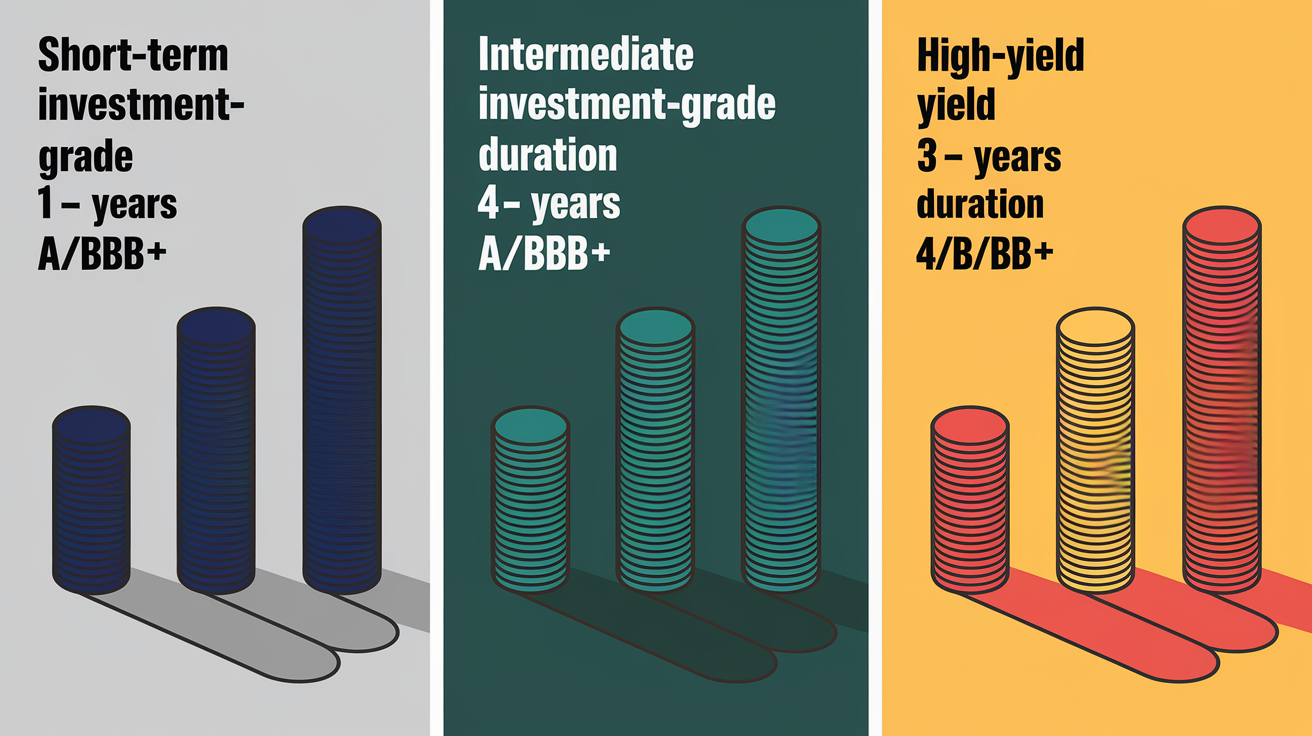
A short-term investment-grade fund might hold bonds with an average duration of 1.5 years and credit ratings clustered around A and BBB+. If rates rise 1%, you’d expect about a 1.5% price drop. Annoying, but you’ll recover that loss with a few months of interest. The fund might yield 2.2% in a typical rate environment, enough to beat a money-market fund without taking much risk. These funds work well as a slightly higher-yielding alternative to cash or for money you’ll need in one to three years.
An intermediate-duration fund stretches to 4 to 5 years of duration and might blend A-rated corporates with a slice of BBB credits to goose the yield. You’re looking at around 3.5% yield in exchange for a potential 4 to 5% loss if rates jump 1%. The math works if your horizon is three to seven years and you can tolerate moderate swings. Intermediate funds are the workhorses of most bond allocations. They balance income and stability better than the extremes.
High-yield funds flip the script. Duration often sits in the 3 to 5 year range, similar to intermediate-grade funds, but the credit quality drops to BB, B, and sometimes CCC. Yield might hit 6 to 8%, but default risk and credit-spread volatility dominate the return pattern. In a recession, high-yield funds can lose 15 to 25% as defaults spike and spreads widen. They belong in the income-seeking part of a portfolio, not the capital-preservation part. Most investors should cap high-yield exposure at 10 to 30% of their fixed-income allocation.
| Fund Type | Typical Duration | Credit Quality | Risk Level | Expected Yield |
|---|---|---|---|---|
| Short-Term Investment-Grade | 1–3 years | A / BBB+ | Low | 1.5–2.5% |
| Intermediate Investment-Grade | 4–6 years | A / BBB | Moderate | 2.5–4.0% |
| Long-Duration Core | 7–12 years | AA / A | High (rate risk) | 3.5–5.0% |
| High-Yield | 3–6 years | BB / B | High (credit risk) | 6.0–9.0% |
Allocation Strategies Across Market Environments

When rates are rising or expected to climb, shortening duration is the most direct defense. Moving from a 6-year duration fund to a 2-year fund cuts your rate sensitivity by two-thirds, limiting losses while you wait for higher yields to become available on new bonds. You give up some income in the transition, but you avoid the bigger capital hit. Many investors also shift toward floating-rate funds during rate hikes, since those funds reset their coupon payments as rates rise, keeping duration near zero.
In a falling-rate environment, the opposite move pays off. Locking in longer duration before rates drop lets you capture price appreciation on top of your coupon income. If you’re holding a 10-year duration fund and rates fall 1%, you pick up roughly 10% in price gains. The risk is mistiming the call. If rates keep climbing, that 10-year duration fund hands you steep losses. Blending intermediate and long-duration funds gives you some upside exposure without betting the whole portfolio on your rate forecast.
Scenario-based adjustments:
- Rising rates: Favor short-duration funds (1 to 3 years), floating-rate bonds, or ultra-short strategies. Accept lower yield to preserve capital and reinvest at higher rates later.
- Falling rates: Extend duration to 6+ years or add long-duration funds. Lock in current yields and capture price gains as rates decline.
- Credit stress (recession risk): Shift toward higher credit quality (A and above), reduce high-yield exposure, and accept lower yield in exchange for lower default risk and better liquidity.
- Stable markets: Blend short, intermediate, and selective high-yield to balance income and risk. Rebalance when any sleeve drifts more than 5 to 10% from target.
Tools and Metrics for Evaluating Bond Funds
Every bond fund publishes a fact sheet, and that’s where you’ll find the numbers that matter. Look for the fund’s modified or effective duration first. That tells you rate sensitivity. Then check the average credit rating or the percentage breakdown by rating category (how much AAA, how much A, how much BBB, how much below investment-grade). Those two data points, duration and credit mix, explain most of the fund’s risk and return behavior.
SEC yield is the standardized yield calculation required by regulators. It shows what the fund would yield over the next year if every bond were held to maturity and all income reinvested. It’s a cleaner number than distribution yield, which can include return of capital or one-time gains. Yield-to-worst (YTW) tells you the lowest possible yield if every bond in the portfolio is called or matures at the worst time for you. Useful for callable bond funds. Compare SEC yield across similar funds, and make sure any yield pickup is explained by higher duration, lower credit quality, or both, not by hidden fees or leverage.
Key metrics to check:
- Modified or effective duration: Shows interest-rate sensitivity. Higher means more volatility from rate moves.
- Average credit rating and rating distribution: Tells you default risk and migration risk. Prefer funds that break out percentages in AAA, AA, A, BBB, and below.
- SEC yield and yield-to-worst: Standardized income measures. Use to compare funds on an apples-to-apples basis.
- Expense ratio: Annual fee as a percentage of assets. Target under 0.50% for passive or broad investment-grade funds, under 1.00% for active or high-yield strategies.
- Historical drawdown and volatility: Look at maximum losses during past rate spikes (2013, 2022) and credit events (2008, 2020) to see real-world risk.
Final Words
You learned how duration measures interest-rate sensitivity and how credit quality shows issuer strength. Both shape a fund’s price swings and income potential.
We walked through duration types, rating scales, trade-offs between yield and risk, a step-by-step selection checklist, example fund comparisons, allocation moves for different markets, and useful metrics to screen funds.
Keep a simple checklist: match duration to your horizon, blend credit qualities, watch fees, and review tools regularly. This makes choosing bond funds by duration and credit quality easier and more confident.
FAQ
Q: What is duration and why does it matter for bond funds?
A: Duration measures a bond fund’s sensitivity to interest rate changes, and it matters because higher duration means bigger price swings, so match duration to your time frame and risk comfort.
Q: What does a duration of 10+ mean?
A: A duration of 10+ means the fund is highly rate-sensitive—roughly a 10% price move for a 1% rate change—so expect larger volatility than shorter-duration funds.
Q: How do effective duration and modified duration differ?
A: Effective duration includes the impact of embedded options (calls, prepayments), while modified duration estimates sensitivity for plain bonds; use effective for callable or mortgage funds.
Q: How does credit quality affect yield and risk?
A: Credit quality signals issuer strength: lower-rated bonds usually offer higher yield but higher default and price risk, so blend grades to raise income without taking too much risk.
Q: How should I choose bond funds based on duration and credit quality?
A: Choose bond funds by matching duration to your horizon, selecting credit mix for income needs, checking fees and diversification, and setting a rebalancing rule.
Q: What metrics and tools should I check before buying a bond fund?
A: Check duration, credit breakdown, SEC yield and yield to maturity, fees, and historical drawdowns, and use fund screeners to compare duration and credit exposure visually.
Q: How do I manage bond allocation across different market conditions?
A: Manage allocation by shortening duration in rising-rate environments, lengthening in falling-rate periods, blending credit quality during stress, and diversifying in stable markets.
Q: What are common mistakes when picking bond funds?
A: Common mistakes are chasing the highest yield, ignoring duration and fees, not diversifying credit risk, and panic selling after drops; set simple rules instead.
Q: When should I prefer high-yield bond funds?
A: You should prefer high-yield bond funds when you need higher income and accept bigger default and price risk; keep allocations modest and diversify well.