

What if doing nothing is the riskiest move in your portfolio?
When funds drift, your risk picture changes without you noticing.
This post gives clear, usable rules for rebalancing a multi-fund portfolio so you keep the risk you chose.
You’ll learn when to act using calendar checks, drift thresholds, or a mix of both.
It also shows a step-by-step workflow and tax-smart choices so rebalancing stays low cost and low stress.
Read on to get a simple plan you can use in 15 to 60 minutes a year.
Core Principles for Maintaining a Multi‑Fund Portfolio’s Target Allocation
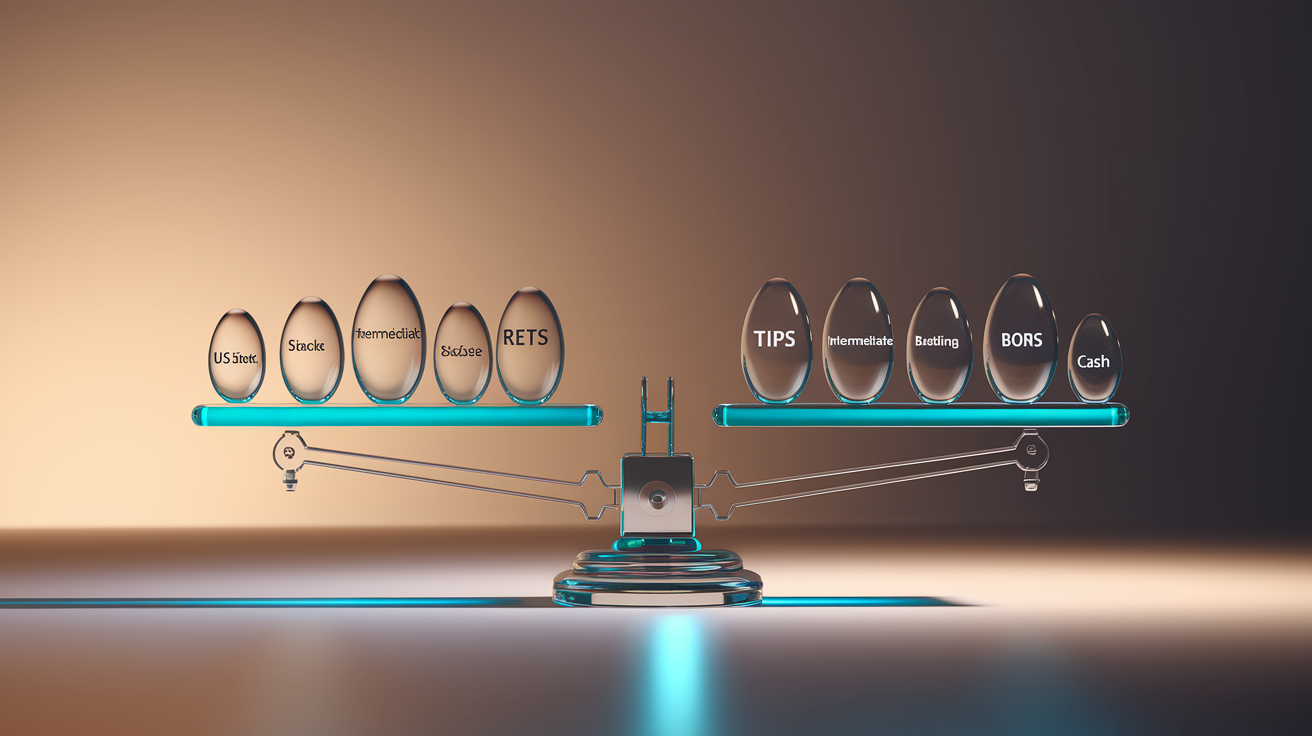
Rebalancing keeps your portfolio lined up with the allocation you chose as different funds grow at different speeds. Without it, a 50/50 stock/bond split can drift to 55/45 or 60/40 after a couple strong equity years, quietly shifting your risk exposure. The whole point is risk control. You want the volatility level you picked, not whatever the market decides to give you.
A typical multi‑fund setup might look like this: US stocks 30%, international stocks 10%, small value stocks 5%, REITs 5%, TIPS 20%, intermediate bonds 20%, short‑term corporate bonds 5%, cash 5%. Over time, US stocks might climb to 35% and international stocks fall to 8%, REITs drop to 3%, while bonds stay pretty steady. Each shift pulls you further from your plan. Rebalancing forces buy‑low/sell‑high discipline automatically. You trim what ran up and add to what lagged, which feels wrong but keeps your strategy working.
It also protects you from emotional tinkering. When you follow a written plan and rebalance on a schedule or when drift crosses a threshold, you sidestep panic selling during drops and euphoric buying near peaks. Most investors spend under an hour a year on this once the process is documented and straightforward.
The two main ways to trigger a rebalance are:
Time‑based: rebalance on a fixed calendar schedule, like once a year or every quarter.
Threshold‑based: rebalance only when an asset class drifts beyond a chosen percentage band.
Drift in a simple two‑fund portfolio is easy to spot. Drift across eight or ten funds needs a spreadsheet or tracking tool but follows the same logic: measure current weights, compare to target weights, decide whether the gap justifies action.
Time‑Based Rebalancing Rules for a Multi‑Fund Portfolio

Time‑based rebalancing means picking a date (January 1, your birthday, Tax Day) and rebalancing every year (or every six months, or every quarter) no matter how much drift has happened. Annual rebalancing is most common. Many studies and practitioners recommend rebalancing every 1 to 3 years. Quarterly or semiannual schedules work for people who want tighter control or who make uneven contributions throughout the year, but more frequent rebalancing increases transaction costs and the chance of triggering taxable gains.
The upside of time‑based rules is simplicity and discipline. You don’t watch the market or guess when to act. You just put a reminder on your calendar and execute the plan. This avoids over‑trading and fits naturally with annual tax planning or contribution cycles. For people who contribute monthly to a 401(k) or quarterly to an IRA, time‑based rebalancing pairs well with directing new contributions to underweight asset classes between formal rebalances.
Time‑based rebalancing tends to do better when markets trend steadily in one direction and threshold methods would trigger no action. It also sidesteps the temptation to delay rebalancing “just a little longer” when a fund is still climbing. The calendar doesn’t care about headlines, and that’s the point.
Threshold‑Based Guidelines for Managing Portfolio Drift

Threshold‑based rebalancing tracks how far each fund has moved from its target percentage and triggers action only when drift crosses a defined line. This cuts unnecessary trades during calm markets and focuses attention on real deviations. Drift gets measured two ways: absolute deviation (percentage points away from target) and relative deviation (percentage change from the target weight).
Here are the core threshold rules for multi‑fund portfolios:
-
Absolute threshold: Rebalance when an asset class is more than X percentage points away from target. Common values are 2%, 3%, or 5%. For example, if international stocks have a 10% target and rise to 13%, the absolute drift is 3 percentage points.
-
Relative threshold: Rebalance when an asset class has grown or shrunk by more than Y% of its target weight. Typical values are 20% or 25%. Using a 10% target and a 25% relative band, you’d rebalance when the allocation moves above 12.5% (10% × 1.25) or below 7.5% (10% × 0.75).
-
Hybrid 5/25 rule: Rebalance when drift exceeds 5 percentage points or 25% relative, whichever comes first. This catches large moves in small allocations and moderate moves in large allocations. For a 10% target, 25% relative equals 2.5 percentage points, so a move to 13% is only 3 points absolute but over 25% relative (13% > 12.5%), triggering a rebalance.
-
Wider bands for major versus minor allocations: Use tighter bands (1 to 3 percentage points) for your largest holdings like US stocks or total bonds, and wider bands (5 to 10 points) for small allocations like REITs or sector funds, to avoid chasing noise in small positions.
-
Cost‑aware delay rule: If drift triggers your threshold but the required trade would be very small or would generate a large taxable gain, document the exception and delay the rebalance until the next scheduled check or until drift widens further.
In taxable accounts, some investors allow drift up to 10 percentage points before acting, then sell only enough to bring the allocation back to 5 points above target rather than all the way to target. This reduces realized capital gains while still controlling risk. For example, if US stocks drift from a 30% target to 40%, you might sell enough to bring them back to 35% instead of 30%, deferring the rest of the tax hit.
Step‑by‑Step Process for Rebalancing a Multi‑Fund Portfolio
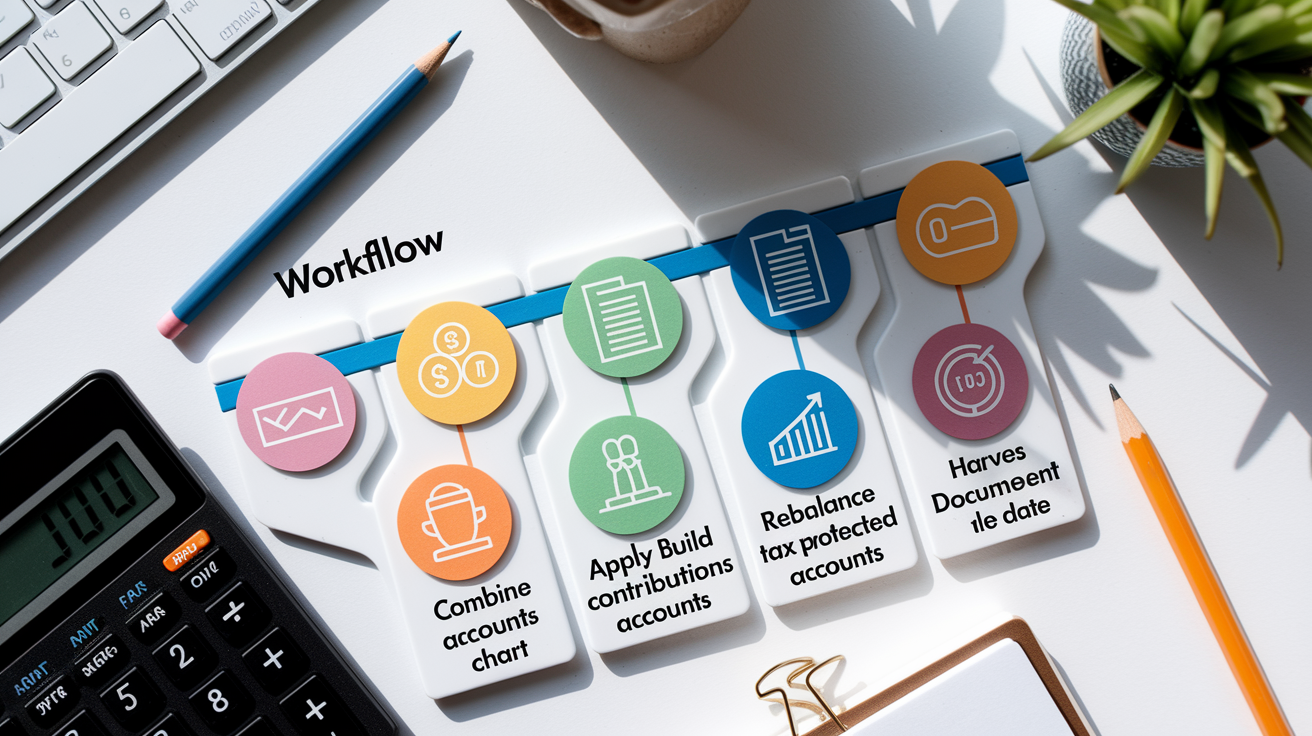
A repeatable workflow cuts mistakes and keeps rebalancing quick. The process below works whether you hold two funds or twelve, and whether you manage one account or five.
-
Combine all accounts with the same goal into one view. If your 401(k), Roth IRA, and taxable brokerage account are all for retirement, treat them as a single portfolio. Build a spreadsheet or use a portfolio tracker showing each fund’s target percentage, current market value, and current percentage. Calculate total portfolio value by summing all account balances.
-
Build a rebalancing chart. For each asset class, compute current weight = current value ÷ total portfolio value. Subtract target weight to find deviation. Flag any asset class where |deviation| exceeds your chosen threshold or where your scheduled rebalance date has arrived. Example: International stocks target 10%, current value $13,000, total portfolio $100,000 → current weight 13% → deviation +3 percentage points.
-
Rebalance first using new contributions and withdrawals. If you’re adding $5,000 this month, direct it all to underweight funds. If you’re withdrawing $5,000, sell from overweight funds. This step costs nothing and may eliminate the need for additional trades.
-
Next, rebalance within tax‑protected accounts. Execute any remaining buy/sell trades inside 401(k)s, traditional IRAs, and Roth IRAs before touching taxable accounts. Gains and losses inside these accounts have no immediate tax impact.
-
Handle taxable accounts last, and use tax‑loss harvesting when available. If you must trade in a taxable account, check for positions sitting at a loss and harvest those first (losses offset gains and up to $3,000 of ordinary income per year). Avoid reinvesting dividends automatically. Instead, take dividends as cash and direct the cash to underweight funds. When selling winners, use highest‑basis shares and prefer long‑term capital gains (holding period over 12 months) to minimize tax rates.
-
Minimize the number of transactions. Combine trades where possible and try to place all orders on the same day. Be aware of order deadlines. ETFs trade during market hours. Mutual fund orders often have a 4:00 PM ET cutoff (or earlier for some plans like TSP’s noon ET deadline). If your plan or custodian uses percentage‑only inputs (common in 401(k) plans), convert your target percentages to dollar amounts when calculating cross‑account moves.
-
Document the rebalancing date, pre‑ and post‑allocation percentages, and the rationale. Write down which rule triggered the rebalance (calendar date or threshold breach) and any exceptions you made (deferred a taxable trade, harvested a loss). This record keeps you consistent and honest with your process over time.
Following this sequence ensures you spend the least on taxes and trading costs while keeping your portfolio lined up with your target allocation.
Tax‑Efficient Guidelines for Rebalancing Multi‑Fund Allocations
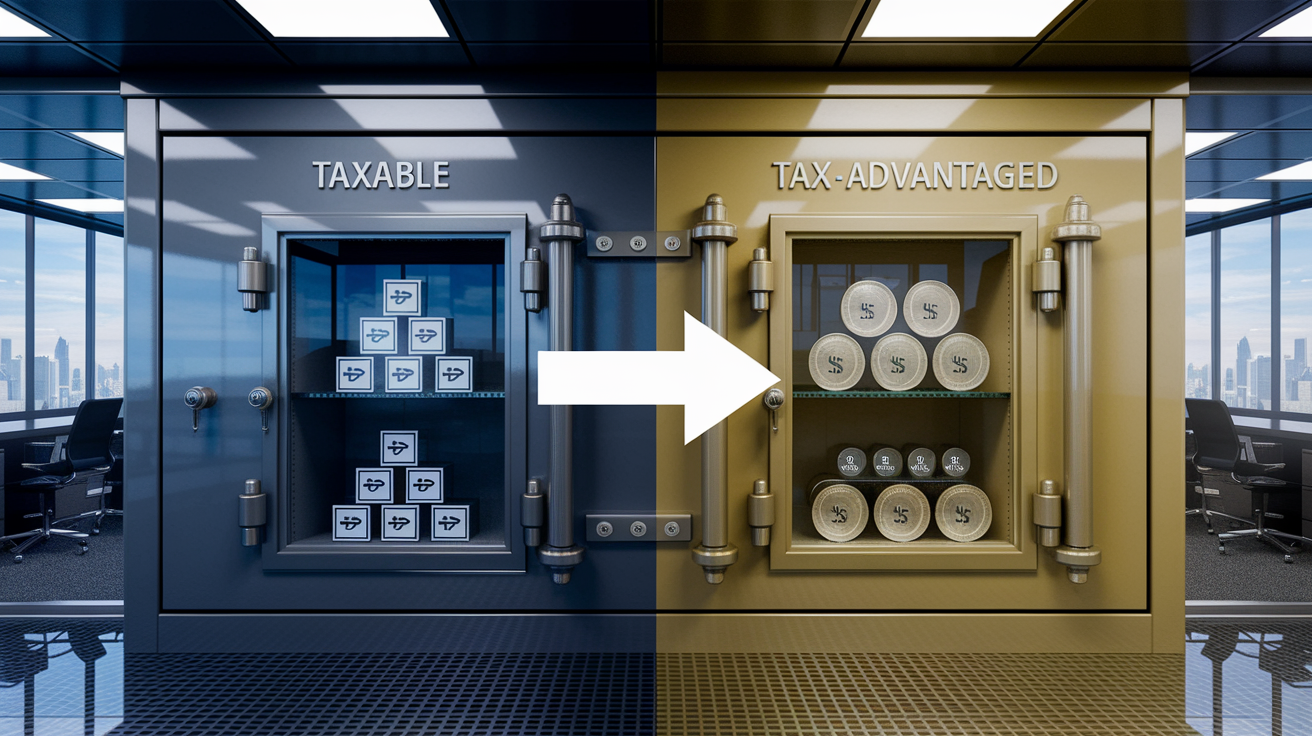
Taxes are often the biggest cost of rebalancing, bigger than commissions or bid‑ask spreads. Realizing capital gains in a taxable account triggers tax at long‑term rates (typically 15% or 20% for most investors, plus 3.8% net investment income tax at higher incomes) if you held the fund for more than 12 months, or at ordinary income rates if held 12 months or less. Avoiding or deferring these taxes is a core goal of tax‑efficient rebalancing.
The first rule is to rebalance inside tax‑advantaged accounts whenever you can. Trades inside a 401(k), traditional IRA, or Roth IRA don’t trigger taxable events, so you can freely sell appreciated funds and buy lagging funds with no tax bill. When allocations are split across taxable and tax‑advantaged accounts, prioritize executing rebalancing trades in the tax‑advantaged accounts first. If you need to reduce US stocks and increase international stocks, and both are held in your Roth IRA and your taxable account, make the trade inside the Roth and leave the taxable holdings unchanged if you can.
Asset location also matters for long‑term tax efficiency. Place tax‑inefficient assets (bonds, REITs, and any funds with high dividend or interest distributions) inside tax‑advantaged accounts when you can. Hold tax‑efficient equity index funds in taxable accounts where long‑term capital gains and qualified dividends receive favorable tax treatment. This placement reduces taxable income each year and makes rebalancing easier because the assets most likely to need trimming (equities) sit in the taxable account where you can harvest losses or manage gain timing, while the stable, income‑generating assets sit in tax‑protected accounts where trading is tax‑free.
To integrate tax‑loss harvesting with rebalancing, follow these practices:
Check taxable positions for losses about one month, six months, and one year after purchase, and again after any major market drop. Harvest losses opportunistically by selling at a loss and immediately buying a similar but not “substantially identical” fund to maintain your allocation. For example, sell a total US stock market fund at a loss and buy an S&P 500 fund or a large‑cap blend fund.
Use harvested losses to offset realized gains from rebalancing. If you need to sell $10,000 of an appreciated bond fund to rebalance, and you also have $10,000 in unrealized losses in a lagging equity fund, harvest the equity loss first to offset the bond gain. Any excess losses (beyond offsetting all gains) can offset up to $3,000 of ordinary income per year, and remaining losses carry forward indefinitely.
Avoid wash‑sale violations by not repurchasing the same or a substantially identical security within 30 days before or after the sale. Many investors hold different fund families or index providers in taxable versus tax‑advantaged accounts specifically to avoid wash‑sale complications when tax‑loss harvesting. For example, hold Vanguard funds in taxable and Fidelity or Schwab equivalents in your IRA, so you never accidentally trigger a wash sale across accounts.
Direct dividends and interest to cash instead of auto‑reinvesting in taxable accounts. Use that cash to buy underweight asset classes, which lets you rebalance without selling and without additional purchase transactions. This is rebalancing via cash flow and avoids realizing any gains.
Following these tax‑efficient guidelines can save hundreds or thousands of dollars per rebalance, especially in larger portfolios, and often makes the difference between rebalancing annually versus waiting two or three years.
Understanding the Costs of Rebalancing Across Multiple Funds
Rebalancing costs fall into three categories: commissions, bid‑ask spreads, and taxes. Commissions are often zero at major brokerages for their own mutual funds and many ETFs, but some custodians still charge per‑trade fees for certain funds or for trades below a minimum dollar amount. Always confirm your brokerage’s fee schedule before placing orders. Bid‑ask spreads are the gap between the price you pay to buy and the price you get when you sell. For highly liquid ETFs and mutual funds, effective spreads typically range from 0.01% to 0.5% of the trade value. Thinly traded sector funds or international small‑cap ETFs can have wider spreads, making frequent rebalancing more expensive.
Taxes, as covered in the previous section, are usually the biggest rebalancing cost in taxable accounts. Even a small capital gain can carry a 15 to 23.8% tax rate, turning a $10,000 sale with a $5,000 gain into a $750 to $1,190 tax bill. When combined with transaction costs, a rebalance that moves $10,000 at an effective cost of 0.2% ($20) plus a $750 tax bill costs $770 total, or 7.7% of the trade amount. Far more than the expected benefit of tightening a minor drift.
A simple cost‑benefit rule: don’t rebalance if the combined transaction and tax cost exceeds the expected improvement in your portfolio’s risk profile. For most investors, this means avoiding rebalancing trades smaller than $500 to $1,000 in taxable accounts, skipping rebalances that would realize short‑term gains unless drift is severe, and using new contributions or dividend cash to adjust allocations instead of selling. In tax‑advantaged accounts where taxes don’t apply, the bar is lower. Rebalance whenever drift exceeds your threshold and the trade is large enough to be practical (typically at least $100 to $200 to avoid rounding issues and excessive small‑lot trades).
Worked Examples of Multi‑Fund Portfolio Rebalancing
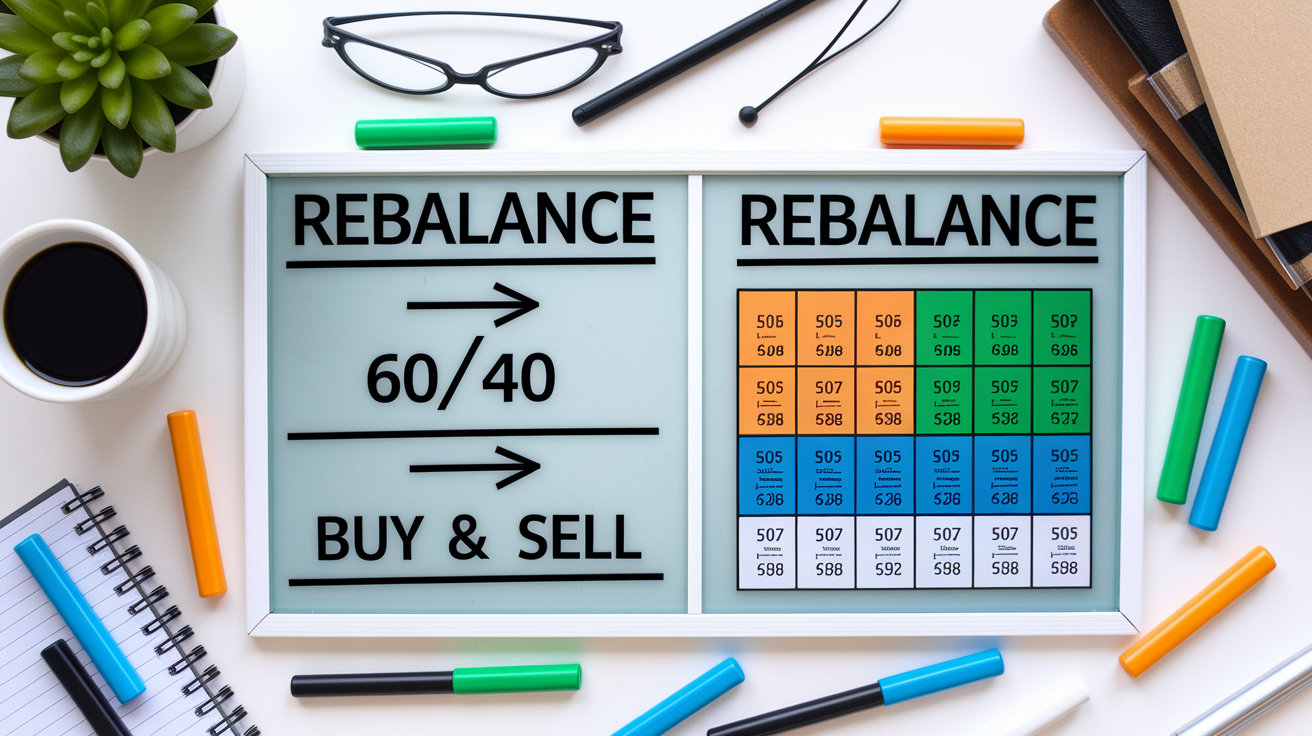
Numeric examples make the rebalancing process concrete. Walking through a few scenarios shows exactly how much to buy and sell and when different rules trigger action.
Example 1: Simple 60/40 two‑fund rebalance. You have a $100,000 portfolio with a target of 60% equities and 40% bonds. After a strong equity year, your equities are worth $68,000 (68%) and bonds $32,000 (32%). The equity allocation is 8 percentage points above target. To rebalance back to 60/40, you’d sell $8,000 of equities and buy $8,000 of bonds (new balances: $60,000 equities, $40,000 bonds). If you use a 5 percentage‑point absolute band, equities at 68% exceed the 55 to 65% range, so a trade is required. With a 10 percentage‑point band (50 to 70%), no trade would be needed yet.
Example 2: Four‑fund rebalance with exact trades. Your $100,000 portfolio targets US equity 40%, international equity 20%, bonds 30%, and REITs 10%. Current values are US $48,000 (48%), international $15,000 (15%), bonds $32,000 (32%), and REITs $5,000 (5%). Deviations: US +8 points, international −5 points, bonds +2 points, REITs −5 points. To reach targets, you need US at $40,000, international at $20,000, bonds at $30,000, and REITs at $10,000. Required trades: sell $8,000 US and sell $2,000 bonds (total sells $10,000), buy $5,000 international and buy $5,000 REITs (total buys $10,000). Notice sells equal buys, which is always true when rebalancing within a portfolio without adding or withdrawing money.
Partial rebalancing and midpoint methods can reduce turnover and trading costs:
Midpoint rebalancing: Instead of moving all the way back to target, trade only halfway. In Example 1, equities at 68% would move to 64% (halfway between 68% and 60%) by selling $4,000 instead of $8,000. This keeps you closer to target without the cost of full precision.
Band midpoint: If your target is 60% with a 5‑point band (55 to 65%), and equities reach 68%, you might rebalance back to the edge of the band (65%) rather than to the center (60%). This minimizes trading while still respecting your risk tolerance.
Cost threshold: Calculate the transaction and tax cost of each trade. If the cost exceeds a set percentage (commonly 0.25 to 0.5% of the trade value), defer that trade and rebalance the rest. For instance, selling $2,000 bonds with a $500 unrealized gain and a 20% tax rate costs $100. If your threshold is 0.5% of trade value ($10 for a $2,000 trade), skip this trade and accept the 2‑point drift in bonds until the next rebalance cycle.
These examples show that rebalancing is straightforward arithmetic: measure current versus target, calculate the difference, and execute the smallest set of trades that brings you back within your chosen bands.
Automation and Tools for Multi‑Fund Portfolio Rebalancing

Automation reduces decision fatigue and ensures your rebalancing rules get followed consistently. Many brokerages offer automatic rebalancing features that monitor your allocations daily and execute trades when thresholds are breached or on a set schedule. Vanguard, Fidelity, Schwab, and other custodians provide these tools for taxable and retirement accounts, often with no additional fee beyond normal fund expenses. You define your target allocation and thresholds once. The system handles the rest.
Target‑date funds and life‑strategy funds rebalance automatically inside a single fund. A target‑date 2040 fund, for example, holds a mix of stock and bond index funds and rebalances that mix quarterly or as needed to maintain the fund’s glidepath. You give up control over individual asset classes and tax optimization, but you gain total simplicity. One fund, zero rebalancing decisions. Life‑strategy funds (such as Vanguard LifeStrategy or Fidelity Four‑in‑One) work the same way but maintain a fixed allocation rather than gliding toward conservative over time.
Robo‑advisors like Vanguard Digital Advisor, Betterment, or Wealthfront monitor portfolios continuously and rebalance whenever drift exceeds their internal thresholds (often 1 to 3 percentage points). They also perform daily tax‑loss harvesting in taxable accounts. The tradeoff is cost: robo‑advisors typically charge an advisory fee around 0.25 to 0.30% per year on top of underlying fund expense ratios. For a $100,000 portfolio, that’s $250 to $300 annually. Compare that to the time and attention required to rebalance manually once or twice a year.
Spreadsheets remain the most flexible and lowest‑cost option for many investors. A simple tracker with columns for fund name, target percentage, current value, current percentage, deviation, and trade amount lets you calculate a full rebalance in minutes. Formulas like target_value = total_portfolio_value × target_weight and trade_amount = target_value − current_value handle the math automatically. Set conditional formatting to highlight deviations beyond your threshold, and you have a custom rebalancing dashboard. Many investors use Google Sheets with live price feeds or link to portfolio aggregators like Personal Capital, Morningstar, or Empower for up‑to‑date valuations.
| Tool Type | Cost | Best Use Case |
|---|---|---|
| Brokerage auto‑rebalance | $0 (included) | Set‑and‑forget; single custodian; tax‑advantaged accounts |
| Target‑date / life‑strategy fund | Fund ER only (~0.05–0.15%) | Maximum simplicity; accepting glidepath or fixed allocation |
| Robo‑advisor | ~0.25–0.30% + fund ER | Continuous monitoring, daily TLH, multi‑account coordination |
| Spreadsheet | $0 | Full control; custom thresholds; multiple custodians; learning |
Pick the tool that matches your time, complexity, and desire for control. Automation shines when it reduces the chance of skipping rebalances or making emotional trades. Manual spreadsheets shine when you want transparency, custom rules, or coordination across many accounts and goals.
Best Practices and Common Mistakes in Rebalancing Multi‑Fund Portfolios

Sticking to a disciplined, written rebalancing plan matters more than optimizing every detail. Investors who rebalance consistently using any reasonable method (annual calendar, 5% bands, quarterly checks) outperform investors who rebalance sporadically or abandon the plan during market stress. The biggest behavioral risk is abandoning rebalancing when it feels wrong: selling stocks after a crash feels like locking in losses, and trimming stocks during a bull run feels like leaving gains on the table. Both feelings lead to drift and unintended risk exposure.
Chasing perfection is another common mistake. A 30% target that drifts to 30.5% isn’t a crisis. Rebalancing to hit targets within 0.1 percentage point wastes time and money on tiny trades. Accept small drifts as normal noise, and act only when your predefined thresholds are breached. Related to perfection‑chasing is over‑frequent rebalancing. Checking daily or weekly and trading every small wiggle increases transaction costs, taxable gains, and stress. Monthly monitoring is the upper limit of useful frequency for most investors. Quarterly or annual is better.
Here are five major mistakes and how to avoid them:
Emotional interference: You see stocks down 20% and delay rebalancing “until they recover,” or you see a fund up 40% and want to “let it run.” Write your rebalancing rules in advance, including exact thresholds and frequencies, and follow them no matter how the market feels. Treat the plan as non‑negotiable.
Ignoring illiquid assets: You hold a rental property or private fund that can’t be sold on demand. Either exclude illiquid assets from your rebalancing calculations and manage liquid investments separately, or add a liquid proxy (like a REIT index fund) that you adjust to keep total real‑estate exposure on target even when the property value changes.
Managing too many funds across too many accounts: A portfolio split across twelve asset classes in five different custodians requires constant attention and invites errors. Simplify by consolidating accounts when you can, reducing the number of distinct asset classes, and holding each asset class in only one or two accounts to make tracking and trading easier.
Not documenting the plan or actual rebalances: Without a written record, you’ll forget your rules, second‑guess past decisions, and drift toward inconsistency. Keep a simple log: date, trigger (calendar or threshold breach), pre‑rebalance percentages, trades executed, post‑rebalance percentages, and any exceptions or lessons learned.
Letting perfect block good: Waiting for the ideal moment, the lowest tax rate, or zero transaction costs often means never rebalancing at all. Accept that some trades will cost a bit in taxes or fees, and that rebalancing is about risk management, not return maximization. A good‑enough rebalance done on schedule beats a perfect rebalance that never happens.
Following these best practices (plan in writing, accept imperfection, keep it simple, and stay disciplined) turns rebalancing from a stressful guessing game into a calm, repeatable process that takes less than an hour a year and keeps your portfolio lined up with your goals.
Final Words
You learned why rebalancing keeps risk under control, how drift appears, and simple rules to act: time-based or threshold-based triggers, step-by-step trades, tax-aware tactics, and when to automate.
We included numeric examples, cost checks, and common mistakes so you can follow a clear process instead of guessing.
Use these guidelines for rebalancing a multi-fund portfolio to set a practical routine, protect gains, and stay calm through market swings. Small, regular steps beat perfect timing. You’ve got a workable plan.
FAQ
Q: What is rebalancing and why does a multi‑fund portfolio need it?
A: Rebalancing keeps a multi‑fund portfolio aligned with its target allocation by selling outsized winners and buying laggards, which controls risk, enforces discipline, and protects you from emotional trading.
Q: What happens if I don’t rebalance my portfolio?
A: If you don’t rebalance, your portfolio drifts toward recent winners, raising unintended risk or lowering expected returns and making future corrections larger, more costly, and more emotionally fraught.
Q: How does portfolio drift occur and what are typical examples?
A: Portfolio drift occurs when asset returns differ and move weights away from targets; a 50/50 mix can drift to 55/45, and a multi‑fund target (US30, Intl10, SmallValue5, REITs5, TIPS20, IntBonds20, ShortCorp5, Cash5) can skew similarly.
Q: What are common time‑based rebalancing cadences and when should I use them?
A: Time‑based rebalancing uses regular cadences like annual, semiannual, quarterly, or every 1–3 years; pick a schedule you’ll stick with (for example January or your birthday) to avoid over‑trading.
Q: What are threshold‑based rebalancing rules and how does the 5/25 rule work?
A: Threshold‑based rebalancing triggers when weights cross set bands; the 5/25 rule uses 5% absolute bands and 25% relative drift. For a 10% target, triggers are >12.5% or <7.5%; taxable accounts may allow ±10%.
Q: What step‑by‑step process should I follow to rebalance a multi‑fund portfolio?
A: Follow these steps: combine accounts, chart current weights, use new contributions, prioritize tax‑advantaged accounts, consider tax‑loss harvesting, minimize trades, and document decisions. Use formulas for current weight, target value, and trade amount.
Q: How can I rebalance in a tax‑efficient way?
A: Tax‑efficient rebalancing uses tax‑advantaged accounts first, places bonds and REITs in tax shelters, uses tax‑loss harvesting (offsets up to $3,000 annually), and avoids 30‑day wash‑sale swaps or substantially identical fund replacements.
Q: How much do rebalancing costs typically affect decisions?
A: Rebalancing costs include spreads (about 0.01%–0.5%), often zero commissions, and taxes as the largest cost; for example, a 0.2% cost on a $10,000 trade equals $20, which matters for small trades.
Q: Can you give worked examples of rebalancing for clarity?
A: Worked examples show exact trades: 60/40 at $100k with $68k/$32k needs selling $8k stocks to buy $8k bonds; a 4‑fund current US48/Intl15/Bonds32/REITs5 to targets US40/Intl20/Bonds35/REITs5 sells US8k, buys Intl5k and Bonds3k.
Q: What automation tools can help with multi‑fund rebalancing and their costs?
A: Automation tools include brokerage auto‑rebalancing, target‑date or life‑strategy funds, robo‑advisors (about 0.30% fee typical), plus spreadsheet templates and alert systems—choose based on cost and how much control you want.
Q: What are common mistakes and best practices when rebalancing multi‑fund portfolios?
A: Common mistakes are over‑trading, chasing performance, ignoring taxes, and lacking a written plan. Best practices: set clear rules, stick to schedule or thresholds, use tax‑sheltered accounts, and simplify across multiple accounts.