


Think owning five funds makes you diversified? Think again.
A fund-of-funds holds shares in other funds so you hire managers and get access to strategies and asset classes you can’t reach alone.
This post gives a clear, step‑by‑step way to build a fund‑of‑funds that truly balances risk: set goals, pick managers, split allocations, and match liquidity and fees to your needs.
Follow the simple checklist and you’ll have a working plan you can start using in 20 minutes.
Core Methodology for Constructing a Diversified Fund‑of‑Funds Portfolio

A fund‑of‑funds portfolio holds shares in other funds instead of picking individual stocks or bonds directly. You’re basically hiring a team of portfolio managers and spreading your capital across their different approaches. The structure gives you access to professional manager selection, specialized strategies, and asset classes that might otherwise need millions in minimum commitments.
Diversification here works in three layers: how many managers you use, what strategies they follow, and which asset classes they invest in. A single equity mutual fund already owns dozens of stocks. But when you add a bond fund, a real estate fund, and a hedge fund, you’re diversifying across asset types. Throwing in multiple managers within each category reduces the chance that one manager’s mistake or style slump wrecks the whole thing. The idea is to build something where poor performance in one spot doesn’t drag down everything else.
People choose fund‑of‑funds structures for convenience, access, and spreading risk. You can get exposure to private equity, venture capital, or specialized hedge strategies without dealing with sky‑high direct minimums or running manager due diligence yourself. The trade‑off? An extra fee layer and sometimes less transparency into what you actually own. But for a lot of investors, the simplification and risk reduction make it worth the cost.
Here’s how to build one:
-
Define objectives and constraints. Set your time horizon (three years, ten years, longer), target return range, maximum acceptable drawdown, and any liquidity needs like quarterly withdrawals or annual capital calls.
-
Determine allocation style. Decide whether to weight each fund equally, weight by risk contribution (volatility or drawdown), or weight by capital availability and expected return.
-
Select fund categories. Choose which asset classes and strategy types to include: equity funds, bond funds, hedge funds, private equity, real estate, commodities, or cash equivalents.
-
Set position and concentration limits. Cap any single manager at 5 to 15% of the portfolio and any single asset class at a percentage that matches your risk tolerance. For example, no more than 40% in equities if you’re conservative.
-
Evaluate liquidity and lock‑up terms. Match redemption windows, notice periods, and capital‑call schedules to your cash‑flow needs. Don’t build a portfolio where everything locks up at once.
-
Execute final allocation and document rules. Commit capital across selected funds, record target weights and rebalance thresholds, and set a monitoring cadence (monthly data review, quarterly performance meetings).
Diversification Principles Specific to Fund‑of‑Funds

Diversification inside a fund‑of‑funds works differently than inside a single mutual fund. A mutual fund that owns 100 stocks is diversified across companies, sure. But all those companies might be in the same country or sector. A fund‑of‑funds spreads risk across managers, strategies, asset classes, and geographies. If one manager underperforms or one strategy falls out of favor, the rest keeps working.
The main diversification drivers are manager dispersion (using multiple independent teams reduces the chance that one team’s mistakes dominate results), strategy variety (combining value, growth, market‑neutral, and event‑driven approaches smooths out periods when one style struggles), and cross‑asset exposure (stocks, bonds, real estate, and commodities often move differently). But you still need to watch correlation. Just because you hold five funds doesn’t mean you’re diversified if all five own the same tech stocks.
Key diversification vectors to hit:
Manager selection. Spread capital across three to ten or more independent managers to reduce idiosyncratic risk from any single team.
Investment style. Mix passive index funds, active long‑only managers, market‑neutral hedge funds, and opportunistic strategies.
Asset class. Combine equity, fixed income, real assets, and alternatives so different economic conditions favor different parts of the portfolio.
Geography. Include domestic and international exposure to capture growth in multiple regions and reduce single‑country risk.
Vintage year or fund cycle. For private markets, commit to multiple vintage years so you don’t dump all your capital into funds launched during one market peak or trough.
Asset Allocation Frameworks for Fund‑of‑Funds

An allocation framework defines how you split capital across fund categories and how you adjust those weights over time. Strategic allocation sets long‑term target percentages and rebalances back to them regularly. Tactical allocation allows short‑term shifts based on market conditions or valuation signals. Hybrid models use strategic targets but permit small tactical tilts within preset bands.
Weighting approaches vary by objective. Equal‑weight assigns the same dollar amount to each fund. Simple, avoids over‑concentration, but ignores risk differences. Volatility‑weight adjusts for expected volatility so higher‑risk funds get smaller allocations and the total portfolio volatility stays within target. Capital‑weight bases exposure on available capital and expected liquidity needs, which is useful when managing capital calls or redemption schedules.
Pick the framework that fits your governance capacity and risk tolerance. If you don’t have the time or data to run monthly tactical shifts, stick with strategic rebalancing. If you have access to risk analytics and want tighter volatility control, use volatility‑weighting.
| Framework | Description | Common Use Case |
|---|---|---|
| Strategic | Fixed long‑term target weights, rebalance quarterly or semiannually back to policy | Long‑horizon investors, endowments, retirement portfolios |
| Tactical | Adjust weights based on near‑term market views, valuations, or momentum signals | Active allocators with research teams, family offices |
| Hybrid | Strategic core with narrow tactical bands (plus or minus 5 to 10%) around each target | Balanced mandates, moderate‑risk fund‑of‑funds |
Types of Underlying Funds to Include
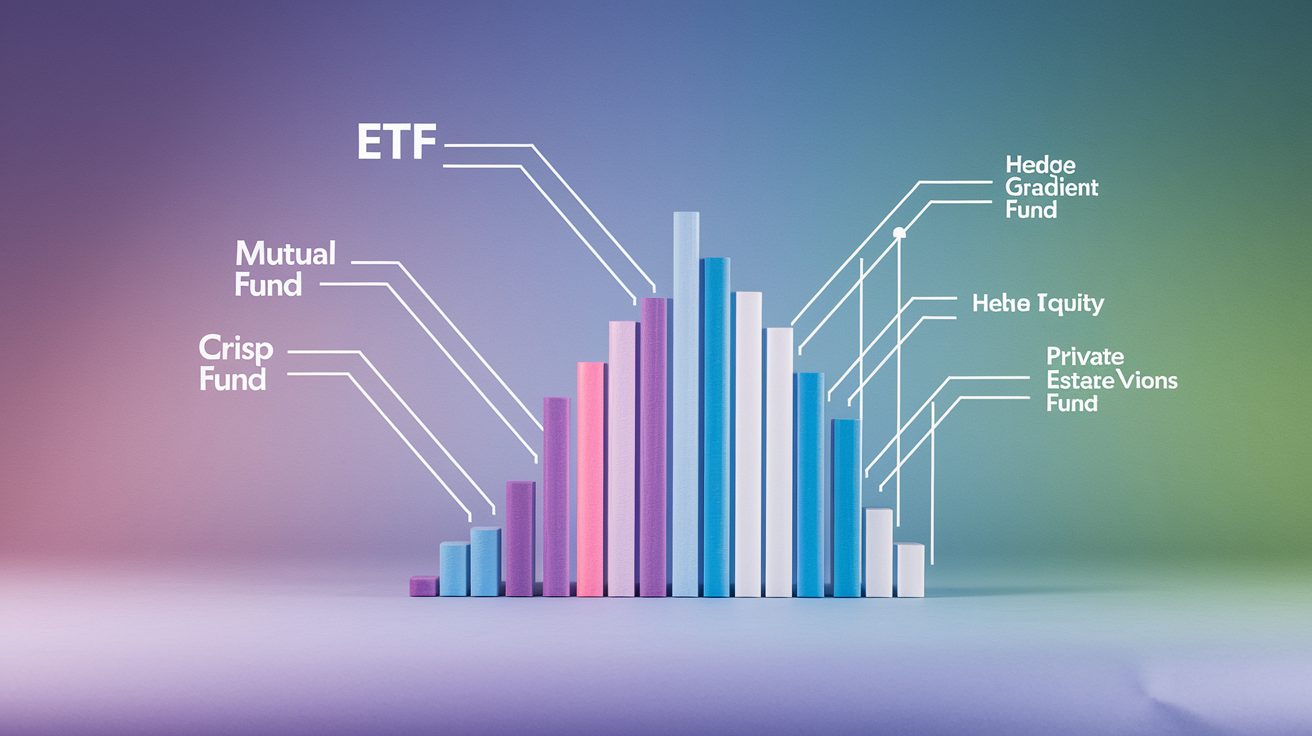
The underlying funds you select determine your portfolio’s risk, return, liquidity, and fee profile. Equity mutual funds and index ETFs offer daily liquidity and low costs, making them a solid core for publicly traded exposure. Bond funds provide income and cushion during equity sell‑offs. Real estate funds and commodity funds add inflation protection and further asset‑class diversification.
Hedge funds introduce strategies like market‑neutral equity, global macro, event‑driven, and relative‑value arbitrage. These funds often target absolute returns with lower correlation to stock and bond indices. But they come with higher fees, less transparency, and longer redemption notice periods (30 to 90 days is common). Use hedge funds when you want return streams that behave differently from traditional markets and when you can accept reduced liquidity.
Private equity and venture capital funds lock up capital for 7 to 10 years and deploy through capital calls over the first few years. They offer access to non‑public companies and potential for higher long‑term returns. But they require patient capital and careful cash‑flow planning. Only include private funds if your time horizon exceeds 10 years and you can fund capital calls without forced liquidations elsewhere.
Real estate funds, infrastructure funds, and private credit funds sit between public and private strategies. Some trade daily (like REITs), others have quarterly redemptions, and some operate as closed‑end funds with multi‑year terms. These funds provide income, inflation linkage, and diversification from equity and bond markets.
Common underlying fund categories to consider:
-
Passive equity index funds or ETFs. Low cost (0.03% to 0.20%), daily liquidity, broad market exposure.
-
Active equity mutual funds. Manager selection and style bets (value, growth, small‑cap). Fees typically 0.5% to 1.5%.
-
Fixed income funds. Government, corporate, high‑yield, or inflation‑linked bonds. Provide income and downside cushion.
-
Hedge funds. Absolute return strategies with varied liquidity (monthly to annual redemptions) and higher fees (1.5% to 2% management plus 15% to 20% performance).
-
Private equity or venture capital funds. Long lock‑ups (7 to 10 years), capital calls, target high returns, require patient capital.
-
Real assets (REITs, infrastructure, commodities). Inflation protection, income, and low correlation to stocks and bonds.
Due Diligence Standards for Underlying Manager Selection

Due diligence separates fund‑of‑funds that add value from those that just collect fees. Start with quantitative screening: require at least three years of audited track record, review rolling returns across full market cycles, and compare performance to relevant benchmarks. Look at maximum drawdown, volatility, Sharpe ratio, and correlation to other holdings. If a fund’s never been tested in a downturn, you don’t know how it’ll behave when you need diversification most.
Qualitative review covers investment process, team stability, and operational infrastructure. Meet the portfolio managers, understand their decision‑making framework, and confirm that the strategy has capacity to grow without diluting returns. Check legal documents for redemption terms, lock‑up periods, and any side‑letter provisions that might give other investors better terms. Operational due diligence includes auditor quality, custodian arrangements, valuation policies, and IT security.
Steps for thorough manager selection:
-
Screen for minimum track record. Require 3 to 10 years of history, with preference for managers who’ve navigated at least one bear market.
-
Analyze risk‑adjusted returns. Calculate Sharpe ratio, Sortino ratio, and maximum drawdown. Compare to peers and benchmarks.
-
Review fee structure. Document management fees, performance fees, hurdle rates, and high‑water marks. Model net‑of‑fee return scenarios.
-
Assess correlation and portfolio fit. Run correlation analysis against existing holdings to ensure the fund adds genuine diversification.
-
Conduct operational due diligence. Verify third‑party audit, independent custody, transparent valuation process, and compliance procedures.
-
Check capacity and AUM trends. Confirm the strategy can handle additional capital without performance erosion. Avoid funds closing to new investors.
-
Document liquidity and legal terms. Understand redemption notice periods, lock‑ups, gates, and any restrictions on withdrawals during stress periods.
Risk Management Considerations in a Fund‑of‑Funds

Risk in a fund‑of‑funds comes from multiple sources: individual manager risk, asset‑class risk, liquidity mismatch, and correlation breakdown. Set concentration limits to prevent any single manager from dominating the portfolio. A common rule is to cap each manager at 5 to 15% and each asset class at a percentage that matches your overall risk tolerance. If one manager blows up or one asset class collapses, the damage stays contained.
Liquidity risk shows up when too many underlying funds have long lock‑ups or overlapping redemption windows. Model your cash‑flow needs and map them against fund redemption schedules. Keep a cash buffer equal to 3 to 12 months of expected outflows so you’re never forced to redeem from an illiquid fund at the worst time. For private funds with capital calls, forecast the drawdown schedule and make sure you have committed capital or credit lines to meet calls without selling liquid holdings under duress.
Stress testing and scenario analysis reveal how the portfolio behaves when things go wrong. Run historical stress scenarios (2008 financial crisis, 2020 pandemic drawdown, 2022 bond‑equity correlation breakdown) and forward‑looking scenarios (inflation spike, recession, geopolitical shock). Check whether correlations hold or break down under stress. If all your “diversified” funds fall together in a crisis, you haven’t achieved effective diversification. Use the stress results to adjust position sizes, add uncorrelated strategies, or increase cash buffers.
Implementation Steps for Building the Portfolio

Implementation turns your allocation plan into live positions. Start with legal and operational onboarding: complete subscription documents, confirm minimum investment amounts, verify investor eligibility, and set up custody or account structures. For hedge funds and private funds, expect onboarding to take 4 to 12 weeks due to anti‑money‑laundering checks, accredited‑investor verification, and legal reviews.
Execution sequence:
-
Prioritize liquid funds first. Open positions in mutual funds and ETFs to get capital working. These can be executed in days to weeks.
-
Coordinate private fund commitments. Align capital calls with your cash‑flow plan. Commit to multiple vintage years to avoid concentration in one fund cycle.
-
Stagger hedge fund subscriptions. Respect monthly or quarterly subscription windows. Submit notices early to meet cut‑off deadlines.
-
Document allocation targets and rebalance rules. Record target weights, drift thresholds, and rebalancing frequency in an investment policy statement.
-
Set up reporting and data feeds. Arrange for NAV updates, performance statements, and portfolio holdings transparency where available.
-
Establish governance calendar. Schedule quarterly performance reviews, annual due diligence updates, and fee renegotiation windows.
-
Model combined fee impact. Calculate the layered cost (underlying fund fees plus fund‑of‑funds overlay) and compare net‑of‑fee returns to benchmarks.
-
Test rebalancing mechanics. Run a pilot rebalance or redemption to confirm that operational processes work smoothly before the portfolio scales.
Fee Structures and Cost Analysis

Every fund‑of‑funds has two fee layers: the fees charged by underlying funds and the overlay fee charged by the fund‑of‑funds manager. Underlying passive ETFs might cost 0.03% to 0.20% annually, active mutual funds typically run 0.5% to 1.5%, and hedge funds often charge 1.5% to 2.0% management fees plus 15% to 20% performance fees. Private equity funds commonly charge 1.0% to 2.0% management fees on committed capital plus 20% carried interest on profits above a hurdle rate (often around 8%).
The fund‑of‑funds overlay adds another 0.5% to 2.0% in management fees and sometimes includes a small performance fee (5% to 10% on returns above a benchmark). Combined, a hedge fund‑of‑funds might cost 2% to 4% in total annual fees before any performance fees kick in. That fee drag reduces net returns significantly over time. A portfolio earning 8% gross but paying 3% in fees delivers only 5% net, a 37.5% reduction in real return.
Lower costs where you can. Use low‑cost ETFs and index funds for core public‑market exposure, negotiate institutional share classes or fee discounts for larger commitments, and make sure the fund‑of‑funds overlay fee is justified by manager access, due diligence, and monitoring that you couldn’t replicate on your own.
| Fee Type | Description | Typical Range |
|---|---|---|
| Underlying fund management fee | Annual fee charged by each fund in the portfolio (passive, active, hedge, private equity) | 0.03% to 2.0% depending on strategy |
| Underlying performance fee | Percentage of profits above a hurdle or high‑water mark, common in hedge and private funds | 15% to 20% of gains |
| Fund‑of‑funds overlay fee | Additional layer for manager selection, due diligence, and portfolio construction | 0.5% to 2.0% annually, sometimes plus 5% to 10% performance fee |
Rebalancing Methods for Fund‑of‑Funds

Rebalancing in a fund‑of‑funds is constrained by liquidity windows, subscription and redemption schedules, and capital‑call timing. Unlike a portfolio of individual stocks that you can trade daily, hedge funds often need 30 to 90 days’ notice to redeem, and private funds lock up capital for years. Plan rebalancing around these constraints and set realistic thresholds that account for transaction costs and market impact.
Calendar‑based rebalancing (quarterly or semiannually) is simple and prevents drift from getting too large. Threshold‑based rebalancing triggers trades only when an allocation moves beyond a set band (for example, rebalance when any position drifts plus or minus 5 to 10 percentage points from target). Combine both methods: review allocations quarterly, but execute rebalancing only when drift exceeds thresholds. This balances discipline with cost control.
Rebalancing rules to follow:
Respect redemption notice periods. Submit redemption requests well before the deadline to avoid missing a quarterly window and waiting another three months.
Rebalance no sooner than quarterly. Frequent rebalancing in illiquid funds is impractical and expensive. Semiannual or annual rebalancing is often more realistic.
Use new contributions to rebalance. Add fresh capital to underweight positions instead of selling overweight positions when possible, reducing transaction costs and tax events.
Monitor correlation changes. If two funds that were supposed to be uncorrelated start moving together, consider replacing one even if the allocation hasn’t drifted yet.
Performance Monitoring and Reporting

Performance monitoring tracks whether the fund‑of‑funds is meeting its objectives and whether underlying managers are delivering as expected. Collect NAV updates monthly, review performance reports quarterly, and conduct full due diligence refreshes annually. Compare each fund’s return to its stated benchmark and peer group. Use attribution analysis to understand which managers and asset classes contributed most to gains or losses.
Risk reporting includes tracking portfolio‑level volatility, drawdowns, and correlation matrices. Monitor whether correlations are stable or breaking down. If equity and bond funds that were supposed to offset each other both fell in the same quarter (like in 2022), document it and decide whether to adjust the allocation. Use Value‑at‑Risk (VaR) or scenario analysis to estimate potential losses in stress conditions.
Governance requires a documented investment policy statement that defines objectives, constraints, rebalancing rules, and manager‑replacement criteria. Hold quarterly performance meetings to review results, discuss manager commentary, and decide whether any positions need to be reduced or exited. Keep independent records and use third‑party data sources (Morningstar, Bloomberg, fund administrator reports) to verify performance numbers. If a manager consistently underperforms or fails operational due diligence, replace them according to the rules you set at the start.
Sample Diversified Fund‑of‑Funds Portfolio Structures
Model portfolios show how to combine different fund types to hit specific risk and return targets. A conservative portfolio emphasizes capital preservation and income, using a large bond allocation, modest equity exposure, and stable alternatives like infrastructure or real estate. A balanced portfolio splits roughly evenly between growth assets (equities, private equity) and defensive assets (bonds, market‑neutral strategies). An aggressive portfolio tilts heavily toward equities, venture capital, and opportunistic strategies, accepting higher volatility and drawdowns in exchange for higher expected returns.
Each model uses multiple managers within each category and spreads capital across geographies and styles. Position sizes respect concentration limits (no single manager over 15%, no single asset class over 50% in balanced portfolios). Rebalancing frequency and liquidity needs shape the choice of underlying funds: conservative portfolios favor daily‑liquid mutual funds and quarterly‑redemption hedge funds, while aggressive portfolios can commit more capital to multi‑year private funds.
| Portfolio Type | Allocation Breakdown | Intended Outcome |
|---|---|---|
| Conservative | 50% bond funds, 20% equity index funds, 15% market‑neutral hedge funds, 10% real estate/infrastructure, 5% cash | Low volatility, stable income, capital preservation; expected net return 4 to 6% annually |
| Balanced | 35% equity funds (index plus active), 25% bond funds, 15% hedge funds (macro, event‑driven), 15% private equity/credit, 10% real assets | Moderate risk, diversified growth and income; expected net return 6 to 9% annually |
| Aggressive | 50% equity funds (including small‑cap, emerging markets), 20% venture capital/private equity, 15% opportunistic hedge funds, 10% commodities/real assets, 5% cash | High growth, higher volatility, long time horizon; expected net return 9 to 14% annually |
Final Words
You now have a clear, step-by-step path for fund-of-funds portfolio construction: defining goals, choosing an allocation style, picking underlying funds, doing manager due diligence, setting risk limits, and handling implementation and fees.
Use the diversification principles and allocation frameworks to shape a plan that matches your time horizon and liquidity needs. Keep monitoring, rebalance within constraints, and watch cost layers.
If you’re ready, pick one small, test allocation and follow the steps. Learning how to build a diversified fund-of-funds portfolio gets easier with practice, and it’s worth the effort.
FAQ
Q: What is the 70 30 rule Buffett?
A: The 70/30 rule attributed to Buffett suggests a 70% stocks / 30% bonds split for many investors, but Buffett himself advised 90% S&P 500 and 10% short-term bonds in his will.
Q: How to build a diversified index fund portfolio?
A: To build a diversified index fund portfolio, pick low-cost broad-market funds across US, international, and bond indexes, set an asset split that matches your goals, automate contributions, and rebalance yearly.
Q: What is the 10/5/3 rule of investment?
A: The 10/5/3 rule of investment is not universal; some use it for position-size limits — for example, 10% per holding, 5% per sector, and 3% for concentrated or higher-risk bets.
Q: What is the 15 * 15 * 15 rule?
A: The 15 * 15 * 15 rule has no single agreed meaning; it’s a shorthand investors use for different heuristics (like 15% savings rate, a 15-year horizon, or other 15-based limits).